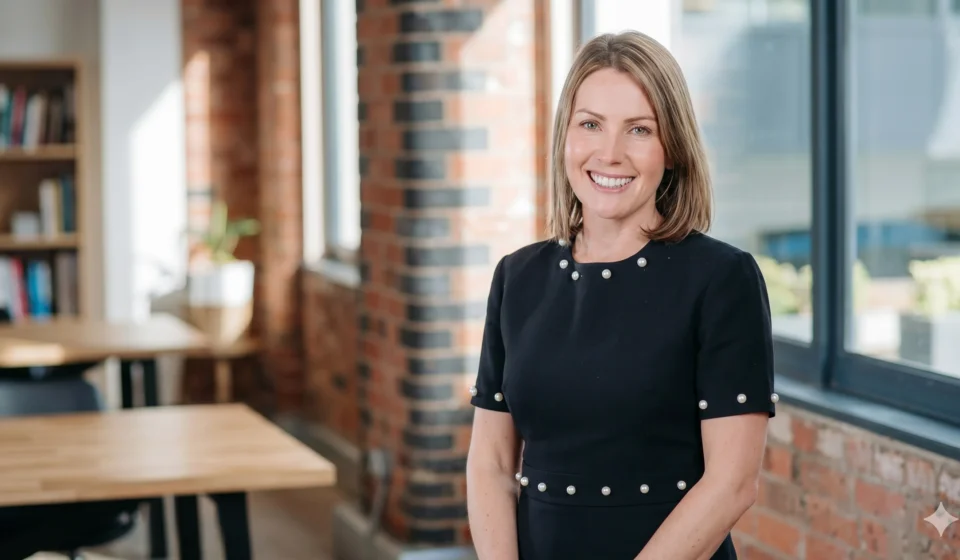

Sarah Lewthwaite is not a celebrity in the usual sense, and that is part of what makes searches for her name confusing. Some readers arrive looking for the private partner of a well-known BBC journalist; others are trying to find the University of Southampton academic whose work has helped define digital accessibility education as a serious research field. The strongest public record points most clearly to Dr Sarah Lewthwaite, a British education and disability studies researcher whose career has centered on higher education, accessibility, digital life, and the way people learn professional skills.
Her public profile is built less on publicity than on scholarship. At the University of Southampton, Lewthwaite is listed as a Principal Research Fellow and co-director of the Centre for Research in Inclusion at Southampton Education School. She leads the UKRI-funded “Teaching Accessibility in the Digital Skill Set” study, a long-running research project focused on how digital accessibility is taught in universities and workplaces. That work matters because digital access now shapes whether people can study, work, apply for services, and take part in ordinary civic life. +1
Early Life and Family Background
Much of Sarah Lewthwaite’s early life remains outside the public record. Unlike public performers, politicians, or television personalities, she has not built a career around autobiographical disclosure. Reliable sources do not provide a confirmed date of birth, hometown, parents’ names, childhood details, or school history. That absence should not be filled with guesswork, especially because several low-quality web pages mix confirmed facts with claims that are not well sourced.
The available record does show that Lewthwaite’s intellectual formation took place in British higher education. Her ORCID profile lists postgraduate study at the University of Nottingham, including an MA in Research Methods in Education and a PhD in the School of Education. Her doctoral work, completed in 2011, examined disability and social networks on campus in higher education. That early academic path helps explain the themes that have stayed with her career: disability, technology, student experience, and the social structures around learning.
Her family life is also largely private. Some public interest in Sarah Lewthwaite comes through reporting on BBC journalist Gary O’Donoghue, who was described by The Independent as living in Yorkshire with his partner, Sarah Lewthwaite, and their daughter Lucy. That report gives a rare confirmed glimpse of her personal life, but it does not justify treating her family as public property. Careful biography has to recognize the difference between a public fact and a private life.
Education and Early Academic Direction
Lewthwaite’s education appears to have shaped her career in a direct and lasting way. Her postgraduate work at the University of Nottingham placed her inside debates about education, disability, research methods, and the lived experience of students. Her PhD title, “Disability 2.0, student dis/connections: a study of student experiences of disability and social networks on campus in higher education,” points to an early interest in how digital and social systems affect disabled students. It also shows that she was working on the social internet and disability before many institutions treated those subjects as central to inclusion.
That background matters because Lewthwaite’s later work did not come from a narrow technical track. She approached digital access through education and disability studies, asking not only whether tools work but who they work for and who gets left out. That is a different kind of question from a purely engineering-based view of accessibility. It asks how institutions teach, normalize, and reward accessibility knowledge.
By the 2010s, her publications had begun to connect web standards, disability rights, higher education, and social research methods. Her ORCID record includes work on disability and web standards, research methods pedagogy, disabled students’ allowances, and critical disability studies. These subjects may seem separate at first glance, but they share a common concern. Lewthwaite’s work repeatedly asks how systems create participation for some people while making participation harder for others.
Career at the University of Southampton
The University of Southampton is the main institutional home associated with Sarah Lewthwaite’s public academic career. Her current university profile lists her as a Principal Research Fellow at Southampton Education School and co-director of the Centre for Research in Inclusion. The profile describes her as leading a research agenda around the teaching and learning of digital accessibility in higher education and the workplace. It also lists her research interests as higher education, critical disability studies, and digital accessibility.
Southampton is a meaningful setting for this work because the university has a long connection with web science, digital systems, and education research. Lewthwaite’s role sits at the meeting point of those fields rather than inside only one of them. That position helps explain why her research speaks to computer science educators, accessibility professionals, social scientists, and university leaders. It is not only about better code or better policy; it is about how people learn to build digital systems with disabled users in mind.
Her professional profile has also developed through the National Centre for Research Methods. A personal academic page describes her as an education, disability studies, and social media researcher working at the National Centre for Research Methods at the University of Southampton. That connection adds another strand to her career: the teaching of research methods and the study of how complex research skills are learned. It is one reason her accessibility work has such a strong teaching and pedagogy focus.
The Work That Made Her Name in Accessibility
Sarah Lewthwaite is best known in academic and professional circles for “Teaching Accessibility in the Digital Skill Set.” The project is funded by UK Research and Innovation and investigates how digital accessibility is taught and learned in computer science, related technical disciplines, and the technology sector. Its public project site describes a study running from 2019 to 2028, with the goal of developing evidence-based resources for teachers, trainers, and peer educators. That is a practical mission, not just a theoretical one. +1
The problem the project addresses is easy to recognize but hard to fix. Many digital products are built by people who were never properly taught accessibility as part of their core professional training. Accessibility is then treated as a late-stage correction, a compliance chore, or the job of one specialist after design choices have already been made. Lewthwaite’s work asks what would change if accessibility were taught earlier, better, and across a wider range of professional settings.
The University of Southampton describes the research as seeking to build a body of knowledge for digital accessibility educators and professionals. It also says the project aims to broaden engagement with evidence-based pedagogy and understand the impact of AI on accessibility education. That last point has become more urgent as artificial intelligence tools enter software development, content production, design, and assessment. If AI changes how digital systems are made, accessibility education has to keep pace with that change.
Major Publications and Research Themes
Lewthwaite’s publication record shows a scholar working across several connected fields. Her ORCID record lists publications on workplace approaches to teaching digital accessibility, research pedagogy in digital accessibility education, social science research methods, disability rights, and inclusive pedagogy. Google Scholar identifies her areas as higher education, disability, accessibility, social media, and research methods. That mix gives her work a distinctive shape, because she studies both digital systems and the educational systems that produce their makers. +1
One important line of her research examines how accessibility is taught in computer science and related disciplines. A 2020 protocol, co-authored with Andy Coverdale and Angharad Butler-Rees, set out a systematic literature review on teaching accessibility in computer science and related fields. Later work with Coverdale and Sarah Horton looked at digital accessibility education in academic and workplace settings. Together, those publications suggest an effort to map not only what accessibility education exists, but how strong the evidence is behind it. +1
Another line of her work focuses on research methods education. She has co-authored work with Melanie Nind and others on social science research methods pedagogy, inclusive teaching, and the experience of learning research methods. This part of her career matters because accessibility education is also a teaching problem. Lewthwaite’s expertise in pedagogy gives her a way to ask how accessibility knowledge is built, transferred, assessed, and made durable.
Disability Studies, Rights, and Public Policy
Lewthwaite’s career has also included public-facing work on disability policy in higher education. Her publication record includes Guardian pieces from 2014 about cuts to Disabled Students’ Allowances and the risks those cuts posed to students’ studies. She also published academic work arguing that government cuts to Disabled Students’ Allowances should be resisted. Those interventions show a researcher willing to connect scholarship with public policy debates.
That policy concern fits with her broader disability studies background. Lewthwaite’s work does not treat disability as an individual deficit to be accommodated after the fact. Instead, it looks at the social, institutional, and technological conditions that create barriers. That outlook is especially important in digital accessibility, where exclusion is often designed into systems through ordinary professional routines.
Her work with Abi James on digital accessibility law and disabled people in the UK also reflects this rights-based approach. The question in that research is not only whether laws exist, but what they mean in practice for disabled users. Laws can set standards, but standards still need people who understand them and institutions that are prepared to act on them. That is where Lewthwaite’s scholarship connects rights, teaching, and professional responsibility.
Marriage, Partner, and Children
Public information about Sarah Lewthwaite’s personal relationships is limited and should be handled carefully. The strongest mainstream report located describes her as the partner of BBC journalist Gary O’Donoghue and says the couple had a daughter named Lucy. That article, published by The Independent, focused on O’Donoghue’s life and career rather than on Lewthwaite herself. It gives some family context, but it does not provide a full private biography.
Some online biography sites describe Lewthwaite as O’Donoghue’s wife, but those claims are not always backed by primary evidence. Because the public record is uneven, the most accurate phrasing is that she has been publicly reported as his partner, with some secondary sites describing her as his wife. There is no need to overstate that point to write a fair profile. Her own professional identity is well documented independently of her connection to O’Donoghue.
The existence of reader interest in her family life is understandable, especially because O’Donoghue is a prominent journalist. Still, Lewthwaite has not made family life the center of her public persona. A respectful biography should not turn sparse personal details into speculation. The verifiable story is strong enough without invading areas she has chosen to keep private.
Public Image and Professional Reputation
Sarah Lewthwaite’s public image is scholarly, low-key, and field-specific. She is not a media personality who courts attention, but within education and accessibility circles she is associated with a serious research agenda. Her University of Southampton, ORCID, Google Scholar, and project profiles all point toward the same identity: a researcher concerned with inclusion, disability, digital systems, and the teaching of complex professional skills. That consistency is useful in a search environment where unrelated or weakly sourced claims can easily crowd around a name.
Her Google Scholar profile lists more than 1,900 citations, a sign that her work has circulated across academic fields. Citation counts are not a perfect measure of influence, but they do show that other researchers have used and engaged with her publications. Her work appears in journals, edited collections, conference proceedings, public writing, and research project outputs. That range suggests a career built across academic research, professional practice, and public debate.
She has also written for higher education and accessibility audiences beyond conventional academic journals. Times Higher Education’s Campus platform lists her as a principal research fellow and co-director of the Centre for Research in Inclusion. SIGACCESS, the Association for Computing Machinery’s accessibility group, published a profile of her work on researching pedagogy in digital accessibility education. These appearances show that her work speaks to both educators and technical accessibility communities. +1
Net Worth, Income, and Funding
There is no credible public net worth figure for Sarah Lewthwaite. Claims about personal wealth on generic celebrity biography websites should be treated with caution unless they are supported by financial filings, verified salary data, or direct reporting. Lewthwaite is an academic researcher, and her income sources are most plausibly connected to university employment, research grants, publications, and related academic work. Public sources do not provide enough detail to estimate her personal assets responsibly.
The better-documented money story is not personal wealth but research funding. Her University of Southampton profile describes her as leading a UKRI Future Leaders Fellowship worth £1.6 million for the “Teaching Accessibility in the Digital Skill Set” study. That figure refers to project funding, not personal income. It supports research activity, staffing, collaboration, dissemination, and the wider work required to build a research program.
This distinction matters because search users often ask about net worth even for people whose public importance does not come from fame or business. In Lewthwaite’s case, the meaningful financial fact is that UKRI has backed her research agenda at a major scale. That tells us more about her standing than a speculative wealth estimate would. It shows that public research funders consider accessibility education important enough for long-term investment.
Current Work and Status
As of the latest public profiles, Sarah Lewthwaite is active at the University of Southampton. Her university page lists her as a Principal Research Fellow, co-director of the Centre for Research in Inclusion, and a researcher accepting PhD applications. The Teaching Accessibility project remains publicly active, with its stated period running to 2028. That makes her current work ongoing rather than retrospective. +1
Her recent research has expanded into workplace accessibility education and the effect of AI on accessibility teaching. This is a natural development, because digital accessibility can no longer be confined to university modules or specialist training sessions. Workplaces need developers, designers, product managers, content teams, procurement staff, and leaders who understand access as part of quality. Lewthwaite’s project addresses that wider chain of responsibility.
The truth is, her work has become more relevant as digital services have become harder to avoid. Education, employment, government services, health systems, and everyday communication all depend on digital access. If the people building those systems are not taught accessibility well, barriers become predictable. Lewthwaite’s research asks how institutions can stop repeating that pattern.
Frequently Asked Questions
Who is Sarah Lewthwaite?
Sarah Lewthwaite is a British academic researcher at the University of Southampton. She is listed as a Principal Research Fellow and co-director of the Centre for Research in Inclusion at Southampton Education School. Her main public work focuses on digital accessibility, disability studies, higher education, and research methods.
What is Sarah Lewthwaite known for?
She is best known for leading “Teaching Accessibility in the Digital Skill Set,” a UKRI-funded research study on how digital accessibility is taught and learned. The project examines accessibility education in computer science, related technical disciplines, and workplace settings. Its goal is to build stronger evidence and resources for people who teach accessibility. +1
Is Sarah Lewthwaite married to Gary O’Donoghue?
The most careful answer is that Sarah Lewthwaite has been publicly reported as Gary O’Donoghue’s partner. The Independent described O’Donoghue as living with his partner, Sarah Lewthwaite, and their daughter Lucy. Some secondary websites call her his wife, but those claims are not as strong as the mainstream report identifying her as his partner.
Does Sarah Lewthwaite have children?
A report in The Independent stated that Gary O’Donoghue lived with his partner Sarah Lewthwaite and their daughter, Lucy. That is the main reliable public reference to her child found in mainstream reporting. Further details about her daughter’s life are private and should not be treated as public biography.
What did Sarah Lewthwaite study?
Her ORCID record lists postgraduate study at the University of Nottingham. It identifies an MA in Research Methods in Education and a PhD in the School of Education. Her doctoral work focused on disability, student experiences, social networks, and higher education.
What is Sarah Lewthwaite’s net worth?
There is no reliable public estimate of Sarah Lewthwaite’s net worth. Generic online claims should be treated cautiously because they rarely show evidence for private financial figures. The confirmed financial fact is that her accessibility education research has been supported by a £1.6 million UKRI Future Leaders Fellowship, which is project funding rather than personal wealth.
Where is Sarah Lewthwaite now?
Sarah Lewthwaite is currently associated with the University of Southampton. Her public university profile lists her as a Principal Research Fellow and co-director of the Centre for Research in Inclusion. Her major accessibility education project is described as running through 2028, and she is listed as accepting applications from PhD students.
Conclusion
Sarah Lewthwaite’s biography is not the story of someone chasing the spotlight. It is the story of a scholar whose public importance comes from patient, applied work on disability, education, and digital systems. Her career shows how academic research can matter outside the university, especially when it deals with barriers that shape everyday life.
The most interesting part of her work is that it looks upstream. Rather than asking only how to fix inaccessible products after they fail, Lewthwaite asks how people are taught to build accessible systems in the first place. That question reaches into classrooms, training programs, workplaces, professional standards, and the culture of technology itself.
Her private life remains mostly private, and that should be respected. What can be said with confidence is that Sarah Lewthwaite has built a serious public record as a researcher at the University of Southampton, with a lasting focus on inclusion and digital accessibility education. In a world where more of life runs through screens, that work is not secondary or specialist. It is part of how participation is made possible.