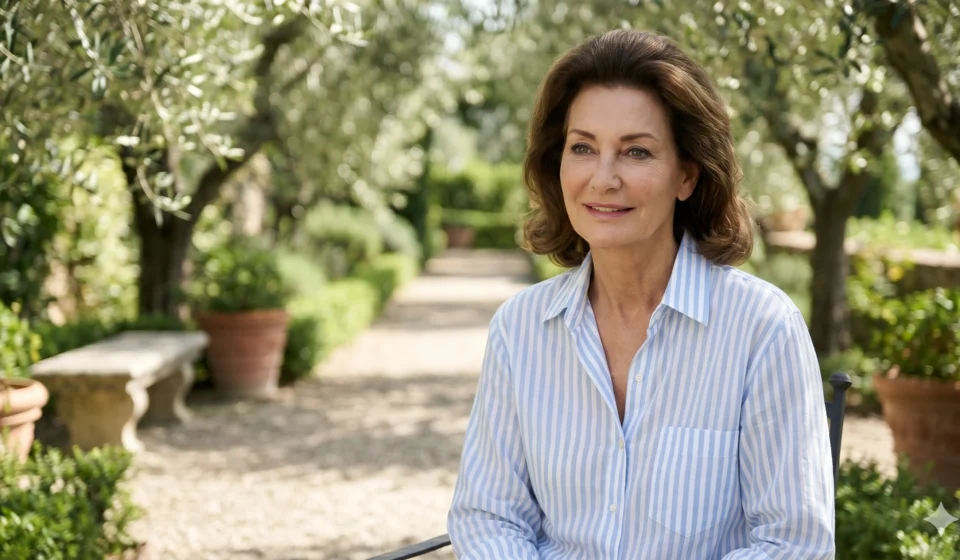

Marlene Knaus entered public memory through one of the most dramatic lives in modern sport. She was the first wife of Niki Lauda, the Austrian Formula 1 champion who survived the 1976 Nürburgring crash and returned to racing six weeks later with burns still fresh and his reputation permanently changed. Yet the more people search for Marlene Knaus, the clearer the central fact becomes: she has spent most of her adult life resisting the kind of exposure that followed her marriage.
That privacy has made her a magnet for half-sourced biography pages, recycled claims, and confident-sounding guesses. She is often described as a former model and fashion figure, and she is reliably known as the mother of Lauda’s two older sons, Lukas and Mathias. Beyond those established facts, the record becomes patchier, especially around her early life, career details, net worth, and current residence. A fair biography has to hold both truths at once: Marlene Knaus lived close to fame, but she never seemed eager to turn that closeness into a public identity.
Who Is Marlene Knaus?
Marlene Knaus is best known as Niki Lauda’s first wife, the woman beside him during the most famous and physically punishing period of his Formula 1 career. Lauda, born in Vienna in 1949, became a three-time Formula 1 world champion, winning titles in 1975, 1977, and 1984. Britannica describes his final two championships as part of a remarkable return after the 1976 crash that left him severely burned and near death.
The public record identifies Knaus as Lauda’s wife from 1976 until their divorce in 1991. Their marriage produced two sons, Lukas and Mathias, both of whom remained connected to motorsport through Mathias’s racing career and Lukas’s work as his manager. That family connection is the most firmly documented part of Knaus’s life, even though many readers come looking for more personal details. +1
What makes Knaus difficult to profile is not a lack of interest, but a lack of solid public material in her own voice. Unlike Lauda, she did not spend decades giving interviews, building companies, writing books, or working in Formula 1 management. Her story is often told through his fame, his accident, his career, and their sons. The result is a biography shaped as much by restraint as by revelation.
Early Life and Background
Many online profiles claim that Marlene Knaus was born in 1956 and had Chilean, Austrian, Venezuelan, American, or mixed European-Latin roots. Those claims are widely repeated but not consistently documented by strong primary sources. Some articles describe her as Chilean-Austrian, while others call her Austrian, Chilean-born, American-born, or Venezuelan in background. The safest reading is that her early life remains partly unconfirmed in the public record.
The same caution applies to her education and family background. There are claims about her parents, siblings, childhood locations, and early schooling, but these often appear on celebrity biography sites that do not show clear sourcing. A serious profile should not turn those claims into facts simply because they appear often. Repetition can make a rumor look stable, but it does not make it verified.
What can be said with more confidence is that Knaus became visible in European social and fashion circles before and during her relationship with Lauda. She is regularly described as a former model, and that description has become part of her public identity. Yet there is little accessible documentation of major campaigns, agencies, magazine covers, or a full professional modeling timeline. That gap matters because it separates a plausible public image from a fully documented career.
Modeling, Style, and the Image That Followed Her
Knaus’s style is one reason she remains memorable to readers who know the Lauda story through photographs and film. She was often framed as elegant, poised, and visually distinct from the louder glamour surrounding 1970s Formula 1. In an era when the sport carried the atmosphere of danger, wealth, speed, cigarettes, champagne, and celebrity, she appeared in public memory as quieter and more composed. That image has lasted longer than many hard facts about her professional life.
Several modern articles call her a model, designer, or fashion figure, but they rarely provide the kind of evidence that would support a detailed career account. There is no widely cited list of runway shows, agency records, or confirmed editorial credits that would allow a careful writer to build a full career timeline. That does not mean she was not involved in fashion; it means the public evidence is too thin for sweeping claims. The more responsible approach is to treat her modeling background as commonly reported but incompletely documented.
Her public image changed after her marriage to Lauda. Before then, any fame she had was connected to fashion and society circles; afterward, she became part of a much larger motorsport story. That shift matters because women close to famous sportsmen are often written about in relation to the man’s narrative rather than their own. Knaus is a clear example of how a private person can become famous without becoming fully knowable.
Meeting Niki Lauda
The details of how Marlene Knaus and Niki Lauda first met are often told in broad, romantic terms, but precise sourcing is limited. Lauda had already become a major Formula 1 figure by the mid-1970s, driving for Ferrari and building a reputation for technical intelligence, discipline, and blunt self-assessment. He was not the carefree archetype of a racing celebrity; he was known for calculation, risk judgment, and a businesslike view of speed. That contrast later became central to the way his rivalry with James Hunt was remembered.
Lauda won his first Formula 1 world championship in 1975, the year before he and Knaus married. By then, he was one of the sport’s defining figures, with Ferrari returning to title-winning form behind his precision and intensity. Formula 1’s own retrospective account places him among the sport’s legends, not only because of his championships but because of what happened after his crash.
Knaus entered Lauda’s life at a time when his career was both ascendant and exposed to extraordinary danger. Formula 1 in the 1970s was still a sport where fatal accidents were painfully common, safety standards were improving but incomplete, and drivers understood that risk was not theoretical. To be married into that world meant living near constant travel, public attention, and the possibility of catastrophe. Within months of their 1976 marriage, catastrophe arrived.
Marriage During the 1976 Season
Marlene Knaus and Niki Lauda married in 1976, the same year Lauda suffered the crash that became the central episode of his legend. At the German Grand Prix on August 1, 1976, Lauda crashed at the Nürburgring, and his Ferrari caught fire. He suffered severe burns and lung damage after inhaling toxic fumes, and for a time his survival was uncertain. The Guardian later described how he returned to racing just six weeks later at the Italian Grand Prix, still bandaged and in pain.
For Knaus, the timing is impossible to ignore. She had not married a retired hero reflecting on past risk; she had married a reigning champion in the middle of a brutal, unfolding season. Lauda’s decision to return so soon has often been treated as an act of courage and will, but it also carried private consequences for the people closest to him. The public saw the comeback; his family saw the recovery at closer range.
The 1976 season ended with James Hunt winning the championship by one point after Lauda withdrew from the Japanese Grand Prix because he judged the rain too dangerous. That choice revealed something essential about Lauda: he was willing to risk his life for racing, but not blindly. It also deepened the public fascination with his character, making everyone around him part of a larger drama. Knaus’s name stayed attached to that chapter because she was there when his life changed from champion’s story to survival story.
Motherhood and Family Life
Knaus and Lauda had two sons together, Lukas and Mathias. Lukas is generally reported as the older son, while Mathias Lauda was born on January 30, 1981, in Salzburg, Austria. Mathias later became a professional racing driver and won the 2017 FIA World Endurance Championship in the LMGTE Am category with Aston Martin Racing.
Mathias’s career gave the Lauda family a second-generation link to motorsport, though his path differed sharply from his father’s. Niki Lauda built his name in Formula 1, the highest and most visible level of single-seater racing. Mathias competed across several series, including Formula Nissan, GP2, DTM, NASCAR Whelen Euro Series, and endurance racing. His achievements deserve to be read on their own terms rather than only as an echo of his father’s career.
Lukas Lauda has kept a lower public profile, but he is widely identified as having managed Mathias’s racing career. That role kept him close to motorsport without placing him in the same public lane as a driver. For Knaus, the careers of both sons added another layer to her connection with racing after her marriage ended. Even as she stayed private, the family name remained present in paddocks and race records.
Divorce and Life After Lauda
Knaus and Lauda divorced in 1991 after roughly fifteen years of marriage. The reasons for the divorce have not been laid out in a fully documented public account, and it would be careless to pretend otherwise. Their separation has sometimes been folded into broader accounts of Lauda’s complicated private life, but Knaus herself has not built a public narrative around the marriage or its end. That silence should be treated as a boundary, not an invitation to guess.
Lauda later married Birgit Wetzinger in 2008. Wetzinger, who had worked as a flight attendant for his airline, donated a kidney to Lauda in 2005 after a kidney he had received from his brother failed. The couple later had twins, Max and Mia, in 2009, expanding the Lauda family well after his first marriage had ended.
One reason Knaus remains a subject of public curiosity is that she did not become a regular public commentator after the divorce. Some former spouses of famous figures give interviews, write memoirs, or appear in documentaries. Knaus did not take that route in any sustained public way. Her post-divorce life has been described as quiet, but the details are often based on unsourced claims rather than direct evidence.
Niki Lauda’s Later Years and Family Context
After retiring from Formula 1 as a driver, Lauda became a businessman, airline founder, television figure, and later an influential figure at Mercedes. Mercedes describes him as a three-time world champion and a key figure in the team’s modern history, including his work as non-executive chairman. His presence at Mercedes was tied to one of Formula 1’s dominant periods, and he helped persuade Lewis Hamilton to join the team.
Lauda died on May 20, 2019, at age 70, after health problems linked in part to the long-term effects of the 1976 crash and later transplant history. Britannica records his death in Zürich and places his career within the highest tier of Formula 1 history. His death brought renewed attention to his family, including Knaus, Birgit Wetzinger, and his children.
That renewed attention did not turn Knaus into a public figure again. Reports around Lauda’s death and memorial naturally focused on his racing record, his comeback, his business career, and the people closest to him. Knaus remained part of that family story, especially as the mother of Lukas and Mathias. Still, she continued to be known more through connection than through public self-disclosure.
Marlene Knaus in Rush
The 2013 film Rush brought the Lauda-Hunt rivalry to a new generation. Directed by Ron Howard and written by Peter Morgan, the film starred Daniel Brühl as Niki Lauda and Chris Hemsworth as James Hunt. Alexandra Maria Lara played Marlene Lauda, giving many viewers their first visual introduction to Knaus as a character within Lauda’s life. IMDb’s cast listing confirms Lara in the role.
The film helped revive interest in the personal lives behind the 1976 Formula 1 season. It presented Lauda as disciplined, unsentimental, and precise, while Hunt appeared more impulsive and pleasure-seeking. Marlene’s character served partly to humanize Lauda outside the cockpit, placing his risk-taking and recovery in a domestic frame. But viewers should remember that a feature film is shaped by drama, pacing, and character economy.
Vogue’s coverage of the film’s costume design observed how the styling of Marlene and Suzy Miller reflected the contrast between Lauda and Hunt. Marlene’s screen wardrobe was described as classic and restrained, matching the film’s portrait of Lauda’s carefulness. That image may have strengthened modern perceptions of Knaus as elegant and understated.
Net Worth, Money, and Inheritance Claims
Search interest around Marlene Knaus often includes questions about net worth. Many websites list figures ranging from tens of millions of dollars to even higher estimates, but these numbers should be treated with caution. They usually appear without court records, estate documents, audited financial statements, or direct confirmation from Knaus. A precise personal fortune cannot be verified from the strongest public information available.
Lauda himself was financially successful beyond racing. He built airline businesses, worked in broadcasting, held senior roles in motorsport, and remained a valuable public figure long after his driving career ended. It is reasonable to assume that his family life involved substantial assets, but reasonable assumption is not the same as proof. Knaus’s divorce settlement, later financial arrangements, and any inheritance details are not fully open public facts.
For readers, the cleanest answer is this: Marlene Knaus is often described as wealthy, but her exact net worth is not reliably established. Any article that states a precise number without explaining its basis should be read skeptically. Money claims are among the easiest details to invent in celebrity biography because they attract search traffic and are hard for casual readers to check. A careful profile should not launder those guesses into certainty.
Public Image and Privacy
Marlene Knaus’s public image rests on a rare combination of visibility and absence. She is visible because she was married to one of the most famous racing drivers in history during the most dramatic years of his career. She is absent because she has not spent decades explaining herself in public. That combination makes her feel familiar and unknown at the same time.
There is a long history of women adjacent to famous men being flattened into roles: the wife, the muse, the beauty, the loyal presence, the ex. Knaus has often been written that way, especially by sites that rely on formula more than reporting. The truth is more modest and more respectful. She was a woman with her own life before Lauda, a spouse during years of intense danger and fame, a mother to two sons, and later a private person who stepped away from public attention.
That privacy has value. In an age when celebrity is often measured by constant visibility, Knaus’s refusal to make herself endlessly available reads almost old-fashioned. It also complicates the work of biography, because the writer cannot fill gaps with fantasy. The most honest portrait of her may be one that accepts the limits of what is known.
Where Is Marlene Knaus Now?
Many online articles claim that Marlene Knaus lives in Ibiza, Spain. That claim appears often, sometimes alongside suggestions that she lives quietly and avoids public events. The problem is that the claim is rarely tied to strong, current sourcing. It may be true, but it should not be presented with the same certainty as her marriage to Lauda or the names of her sons.
As of 2026, there is no strong evidence that Knaus has returned to a public career or maintains an official public profile. She does not appear to give regular interviews, issue public statements, or use celebrity media to shape her image. Her current status is therefore best described with care: she is believed to live privately, and confirmed recent details are limited. That answer may feel less satisfying than a crisp location and lifestyle summary, but it is more accurate.
The continuing search interest around her says as much about Lauda’s legacy as it does about Knaus herself. People want to understand the personal world around a man who survived almost unimaginable injury and returned to the sport that nearly killed him. Knaus was part of that world, but she was never only an accessory to it. Her absence from the spotlight is one of the defining facts of her later life.
Frequently Asked Questions
Who is Marlene Knaus?
Marlene Knaus is best known as the first wife of Niki Lauda, the Austrian Formula 1 champion. They married in 1976 and divorced in 1991, and they had two sons, Lukas and Mathias. She is commonly described as a former model, though detailed documentation of her modeling career is limited in public sources.
How many children does Marlene Knaus have?
Marlene Knaus has two publicly known children with Niki Lauda: Lukas Lauda and Mathias Lauda. Mathias became a professional racing driver and won the 2017 FIA World Endurance Championship in the LMGTE Am category. Lukas is widely identified as having worked as Mathias’s manager.
When did Marlene Knaus marry Niki Lauda?
Marlene Knaus married Niki Lauda in 1976. That same year, Lauda suffered his near-fatal crash at the Nürburgring during the German Grand Prix. The timing is one reason Knaus remains linked to the most famous period of Lauda’s career.
When did Marlene Knaus and Niki Lauda divorce?
Marlene Knaus and Niki Lauda divorced in 1991. Public records and reliable summaries confirm the divorce year, but the private reasons behind the split are not fully documented. Claims that present a detailed emotional account of the divorce should be treated carefully unless they cite strong evidence.
Was Marlene Knaus in the movie Rush?
Marlene Knaus was portrayed in the 2013 film Rush by Alexandra Maria Lara. The movie focused mainly on the 1976 rivalry between Niki Lauda and James Hunt, with Marlene appearing as part of Lauda’s personal story. The film is a dramatization, so it should not be treated as a complete biography.
What is Marlene Knaus’s net worth?
Marlene Knaus’s exact net worth is not reliably verified. Many websites publish estimates, often in the tens of millions, but those figures usually lack clear sourcing. A careful answer is that she is often believed to be financially comfortable, while any precise figure remains unconfirmed.
Where is Marlene Knaus now?
Marlene Knaus is widely reported to live a private life, and some online accounts place her in Ibiza. That location is often repeated, but current public confirmation is limited. What is clear is that she has not pursued a highly visible media profile in recent years.
Conclusion
Marlene Knaus remains a compelling figure because her life sits at the edge of a famous story without being consumed by it. She was married to Niki Lauda during the season that nearly killed him and remade his public legend. She raised two sons whose lives stayed connected, in different ways, to the sport that defined their father.
The facts about her are fewer than search results suggest. Her marriage, divorce, children, and connection to Lauda’s most dramatic years are well established, while many claims about her early life, career details, wealth, and current location are less secure. That difference matters because biography should clarify, not decorate.
Her choice to remain private may be the most revealing part of the story. In a culture that often treats visibility as proof of importance, Marlene Knaus offers a quieter example. She matters not because she chased public attention, but because she lived near an extraordinary life and then protected the rest of her own.